Service Coverage
Understanding the factors that influence pizza delivery service areas and coverage zones.
Introduction to Service Coverage
Pizza delivery service coverage refers to the geographic areas that a particular restaurant or delivery service can serve. Coverage areas are determined by multiple factors that work together to define the boundaries within which delivery service is feasible and practical. Understanding these factors helps explain why delivery service availability varies between locations and why some areas may not be served.
Service coverage represents a balance between customer demand and operational capabilities. Restaurants want to serve as many customers as possible, but practical limitations prevent unlimited expansion of delivery areas. Finding the optimal coverage area requires careful consideration of costs, efficiency, quality maintenance, and customer satisfaction.
The concept of service coverage is particularly relevant in the pizza delivery industry because of the product's unique characteristics. Pizza quality can be affected by delivery time and transport conditions, making proximity and efficient delivery especially important. Unlike some other food items that might travel better, pizza represents a product where distance and delivery time significantly impact the customer experience.
Population Density
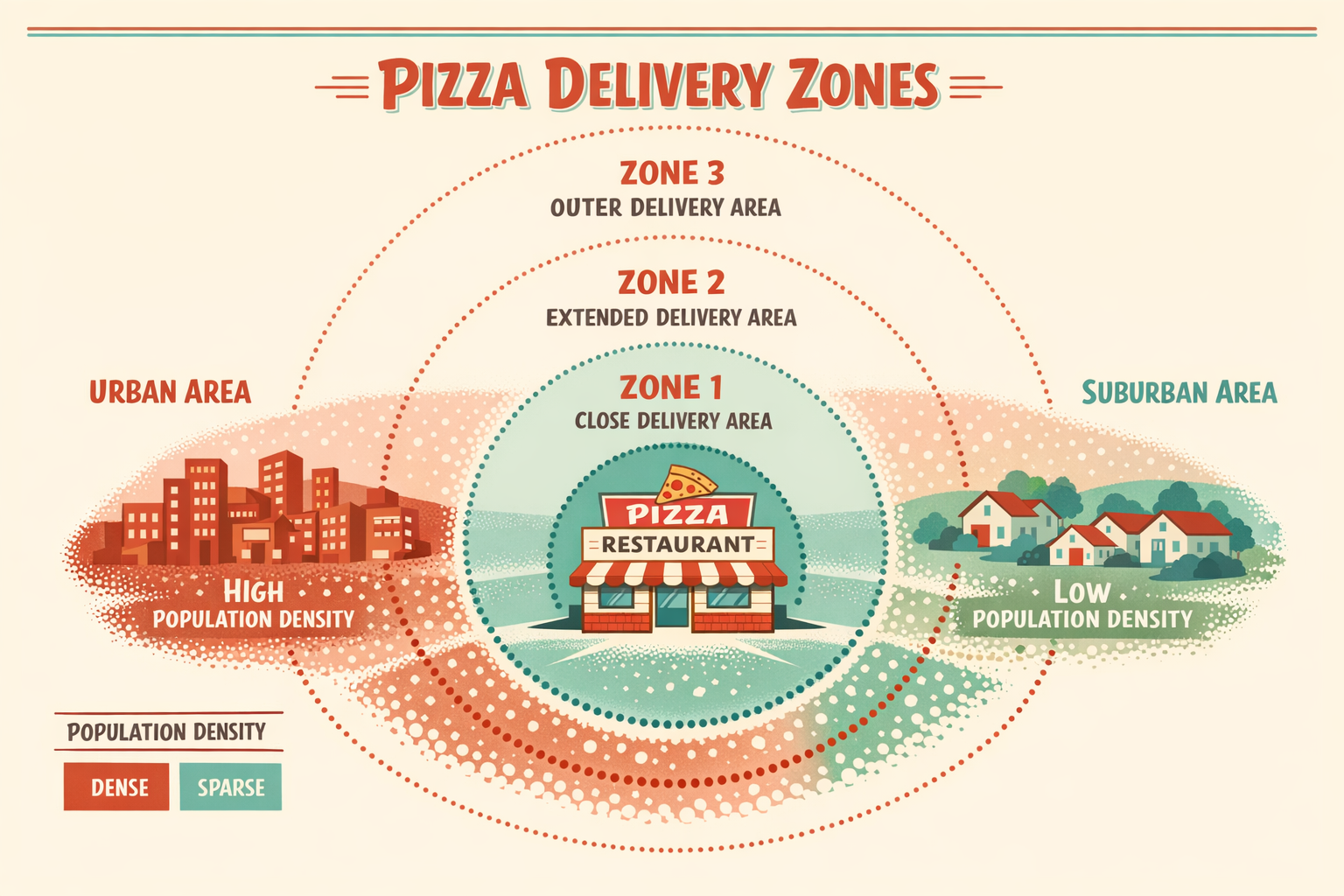
Population density represents one of the most significant factors influencing pizza delivery service coverage. Areas with higher population density typically generate more delivery orders per unit area, making delivery service more economically viable and operationally efficient. Understanding how population density affects delivery coverage helps explain service availability patterns across different types of neighborhoods.
Urban Delivery Efficiency
High-density urban areas offer particularly favorable conditions for pizza delivery services. The concentration of potential customers within a small geographic area means that delivery drivers can complete multiple orders with minimal travel between locations. This efficiency reduces per-delivery costs and makes delivery service economically attractive even with relatively small delivery radii.
In urban environments, buildings often contain multiple households or businesses that can be served from a single delivery stop. Apartment buildings, condominium complexes, and office buildings create delivery concentrations that maximize driver efficiency. A single driver might deliver dozens of orders within a few city blocks, achieving high productivity and minimizing travel time.
The vertical nature of urban development also contributes to delivery efficiency. High-rise buildings concentrate many potential customers at a single address, allowing drivers to serve multiple orders from one parking location. This vertical density contrasts with horizontal suburban sprawl where each delivery typically requires separate stops at individual addresses.
Suburban Coverage Considerations
Suburban areas present different coverage challenges due to lower population density and more dispersed development. The horizontal spread of suburban neighborhoods means that delivery drivers must travel greater distances between individual deliveries, reducing efficiency compared to urban areas. These travel requirements affect how delivery areas are configured in suburban environments.
Despite lower density, suburban areas still generate significant demand for pizza delivery services. The convenience factor that drives delivery demand in urban areas remains relevant in suburban settings, particularly for families and households with busy lifestyles. Restaurants serving suburban areas must balance the desire for wide coverage with the practical limitations of travel time and efficiency.
Suburban delivery coverage often extends over larger geographic areas compared to urban coverage zones. While urban restaurants might serve a radius of just a few miles, suburban restaurants may cover 5-10 miles or more to capture sufficient customer volume. These larger coverage areas are necessary to achieve order volumes that make delivery service economically viable.
Rural Coverage Limitations
Rural areas present the greatest challenges for pizza delivery coverage due to very low population density and long distances between potential customers. The dispersed nature of rural development means that serving widely separated addresses requires significant travel time and fuel costs, making delivery service difficult to provide profitably.
Some rural areas may not have any pizza delivery service available at all due to these coverage challenges. When rural delivery service does exist, it typically comes from restaurants in nearby towns that serve a broad surrounding area. These rural delivery services often have longer delivery times and may have minimum order requirements or delivery charges to offset the higher operational costs.
The limited availability of delivery service in rural areas represents a significant difference from urban and suburban coverage patterns. Residents of rural areas who want pizza delivery may need to travel to the nearest town with delivery service or accept the limitations of available options, which might include longer wait times or higher delivery fees.
Restaurant Proximity
The physical location of restaurants relative to potential customers fundamentally shapes delivery coverage areas. Restaurant proximity affects delivery times, operational costs, and quality maintenance during transport. Understanding the relationship between restaurant location and delivery coverage helps explain service availability patterns and why some areas have more delivery options than others.
Central vs Peripheral Locations
Restaurants located in central, accessible positions typically have greater delivery coverage capabilities than those in peripheral locations. Central positioning allows restaurants to serve customers in multiple directions efficiently, maximizing the potential customer base within a practical delivery radius. This central positioning is particularly valuable in urban areas where land costs and competition for prime locations are significant factors.
Peripheral locations, such as those on the edges of developed areas or in less accessible positions, face inherent limitations in delivery coverage. Restaurants in these locations may only be able to serve customers in one direction effectively, reducing their potential delivery market. These positioning limitations affect both the economic viability of delivery service and the geographic areas that can be served.
Restaurants often consider delivery coverage when selecting initial locations. The ability to serve a broad area through delivery can be a significant competitive advantage, particularly in markets with heavy competition. This consideration influences location decisions and contributes to patterns of restaurant distribution within communities.
Accessibility and Road Networks
The accessibility of restaurant locations, determined by road networks and transportation infrastructure, significantly affects delivery coverage capabilities. Restaurants situated near major roads, highways, or thoroughfares can dispatch and receive delivery vehicles more efficiently than those in locations with poor access. This accessibility advantage translates into broader and more efficient coverage areas.
Road network quality and design influence how quickly drivers can navigate between the restaurant and delivery destinations. Well-planned road systems with good connectivity reduce travel time and enable drivers to complete more deliveries per hour. This increased efficiency supports larger coverage areas and more reliable delivery times.
Traffic patterns and congestion also affect accessibility considerations. While proximity to major roads is generally advantageous, restaurants located in areas with severe traffic congestion may face challenges in meeting delivery time commitments. The balance between good access and reasonable traffic conditions represents an important factor in determining optimal coverage areas.
Competitive Location Distribution
The distribution of competing pizza restaurants within a geographic area influences individual coverage decisions. In areas with many pizza restaurants, each establishment must define its delivery zone carefully to avoid excessive overlap with competitors. This competitive pressure often results in smaller, more focused coverage areas in highly competitive markets.
In markets with fewer pizza delivery options, restaurants may expand their coverage areas to serve unserved or underserved customers. This expansion strategy can be particularly effective for restaurants seeking to capture market share in areas with limited competition. However, expanding coverage too far can strain operational capabilities and affect service quality.
The competitive landscape also affects how delivery areas are defined geographically. Restaurants might shape their coverage zones to avoid direct overlap with particularly strong competitors while focusing on areas where they have competitive advantages. This strategic positioning of coverage areas represents an important aspect of competitive strategy in the pizza delivery industry.
Road Infrastructure
Road infrastructure quality and design significantly impact pizza delivery service coverage and efficiency. The physical characteristics of roads, including their layout, condition, and connectivity, determine how easily and quickly delivery vehicles can navigate between restaurants and customers. Understanding these infrastructure factors helps explain delivery service availability and time variations across different areas.
Road Layout and Connectivity
The layout of road networks affects how efficiently delivery drivers can navigate to customer locations. Grid-based street systems, common in many older urban areas, provide multiple route options and predictable navigation patterns. This predictable connectivity enables efficient route planning and helps drivers avoid delays by selecting alternative routes when necessary.
Cul-de-sacs, dead-end streets, and disconnected road networks present navigation challenges that can affect delivery efficiency. Areas with many cul-de-sacs require drivers to backtrack frequently, increasing travel time and reducing the number of deliveries that can be completed per hour. These layout characteristics influence how delivery areas are configured and may affect whether certain neighborhoods receive service.
Road connectivity also affects emergency routing when primary routes become blocked or congested. Well-connected street systems provide multiple paths between points, allowing drivers to adapt to changing conditions. In areas with poor connectivity, road closures or accidents can create significant delays that affect delivery service reliability.
Road Condition and Maintenance
The physical condition of roads affects delivery vehicle operation and travel times. Well-maintained roads with smooth surfaces allow drivers to travel at optimal speeds and maintain predictable schedules. Poor road conditions, including potholes, rough surfaces, or inadequate maintenance, slow travel and can affect delivery times.
Seasonal variations in road conditions, particularly in areas that experience winter weather, can significantly impact delivery coverage and times. Snow, ice, and poor visibility during winter months may force restaurants to reduce their coverage areas or suspend delivery service entirely. These seasonal variations represent a significant factor in delivery service planning and customer expectations.
Road construction and maintenance projects also affect delivery operations temporarily. Detours, lane closures, and reduced speed limits in construction zones increase travel times and may require route adjustments. Restaurants must consider these temporary disruptions when managing delivery expectations and coverage areas.
Traffic Control and Regulations
Traffic control devices and regulations influence how quickly delivery vehicles can navigate routes. Stop signs, traffic signals, speed limits, and turn restrictions all affect travel times between points. The density and type of traffic control varies significantly between different areas and contributes to delivery time variations.
Areas with many traffic signals and stop signs typically have slower average travel speeds compared to areas with fewer controls. While traffic control is necessary for safety, it represents a factor that must be considered in delivery time estimates and coverage area planning. Experienced drivers develop knowledge of traffic control patterns that helps them anticipate and navigate efficiently.
Local regulations regarding delivery vehicle operations can also affect service coverage. Some communities may have restrictions on delivery vehicle types, operating hours, or access to certain areas. These regulatory considerations influence how delivery services can operate and may limit coverage in some locations.
Driver Availability
Driver availability represents a critical operational factor that affects both the size of delivery coverage areas and the quality of service within those areas. The number of available drivers determines how many orders can be delivered simultaneously and influences delivery times, coverage area decisions, and service reliability. Understanding driver availability considerations helps explain delivery service variations and limitations.
Driver Scheduling and Demand Patterns
Pizza delivery demand follows predictable patterns that influence driver scheduling requirements. Evening hours, particularly dinner time, represent peak demand periods when the most drivers are needed. Weekends also typically generate higher demand than weekdays. Effective scheduling anticipates these patterns to ensure adequate driver availability during peak times.
During off-peak periods, such as mid-afternoon on weekdays, demand is significantly lower, and fewer drivers are scheduled. This reduced availability affects coverage capabilities during these times, potentially limiting the geographic area that can be served or increasing delivery times. Some restaurants may reduce their coverage areas during low-demand periods to maintain service quality.
Seasonal variations, including weather conditions and holidays, also affect demand patterns and driver availability. Restaurants must adapt their scheduling to these variations, which may involve increasing driver availability during certain periods or reducing coverage when demand is low. Understanding these patterns helps restaurants manage both costs and service quality.
Driver Recruitment and Retention
The ability to recruit and retain sufficient drivers affects coverage area decisions and service quality. Restaurants with difficulty attracting and keeping drivers may need to limit their coverage areas or reduce delivery hours to match available driver capacity. Conversely, restaurants that successfully build strong driver teams can expand coverage and offer more reliable service.
Driver compensation, working conditions, and employment policies affect recruitment and retention success. Competitive wages, flexible scheduling, and good working conditions help attract and retain drivers. These human resource considerations ultimately affect service capabilities and coverage area decisions.
Driver experience levels also influence coverage and service quality. Experienced drivers who know the area well can cover larger areas more efficiently than new drivers who are still learning routes and navigation. Building an experienced driver team takes time but contributes significantly to coverage capabilities and service quality.
Coverage Area Limitations
Limited driver availability can force restaurants to reduce their coverage areas or delivery hours. When driver numbers are insufficient to cover a broad area effectively, restaurants may focus on serving a smaller geographic zone where they can provide more reliable service. This strategic reduction in coverage area helps maintain service quality even with limited driver resources.
During periods of driver shortage, some restaurants may implement minimum order requirements or delivery charges to maximize efficiency with available drivers. These operational adjustments help manage demand and ensure that available driver capacity is used effectively. Customers in areas affected by these limitations may experience reduced service availability or different terms.
The relationship between driver availability and coverage area represents a dynamic balance that restaurants must continuously manage. Changes in driver availability due to hiring, departures, or scheduling adjustments require corresponding adjustments to coverage areas and delivery policies. This ongoing management affects the customer experience and service availability in different areas.
Important Information
Please Note: This website provides educational information about factors influencing pizza delivery service coverage. We do not provide delivery services, determine coverage areas, or facilitate any food-related transactions. Coverage areas are determined by individual restaurants and delivery companies based on their specific operational considerations.